
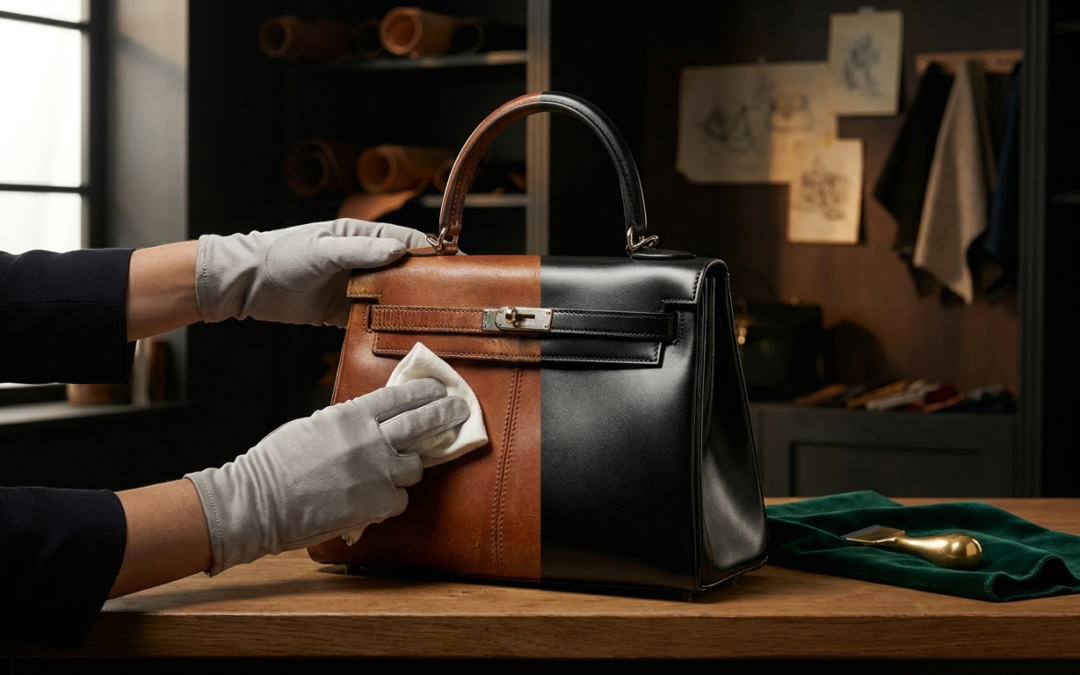
Luxury fashion brand management for a heritage label means protecting the codes, craft, and cultural authority that make the house distinctive while translating them into products, experiences, and stories relevant to today’s clients. The objective is not to repeat the past. It is to make the past commercially, creatively, and emotionally useful in the present.
Contents
- 1 Why heritage labels need a sharper management model
- 2 Start with a heritage strategy, not an archive campaign
- 3 Translate history into contemporary product value
- 4 Modernize storytelling without rewriting the brand
- 5 Protect exclusivity while expanding internationally
- 6 Make craftsmanship commercially legible
- 7 Build governance around the brand’s core codes
- 8 Common mistakes in heritage brand management
- 9 A practical 90-day management agenda
- 10 Conclusion
- 11 FAQs
Why heritage labels need a sharper management model
Heritage gives a luxury house assets that newer competitors cannot quickly reproduce: archival knowledge, recognizable signatures, accumulated trust, specialist craftsmanship, and a credible point of view. But history alone does not create desire. A label can be old yet feel irrelevant, overexposed, or disconnected from the expectations behind its price.
The current luxury environment makes this tension more urgent. McKinsey and The Business of Fashion describe a market shaped by slower growth, more selective clients, pressure on the value proposition, and the need to restore product excellence. Their recommendations include clarifying core values, focusing on priority clients, strengthening craftsmanship, and developing more distinctive experiences. McKinsey’s 2025 luxury analysis supports this shift from indiscriminate expansion toward sharper brand value.
Start with a heritage strategy, not an archive campaign
The first management task is to define what the heritage actually means. An archive contains thousands of references, but a brand cannot activate all of them. Leaders should distinguish between historical material that is merely interesting and heritage assets that can guide decisions today.
Build a heritage hierarchy
- Foundational beliefs: the principles the house has consistently represented, such as technical protection, radical elegance, discretion, or artisanal precision.
- Product authorities: categories where the brand has earned the right to lead.
- Visual codes: silhouettes, materials, colors, construction details, motifs, or architectural elements that are recognizable without excessive logo use.
- Cultural proof: designers, clients, places, collaborations, or moments that demonstrate the brand’s relevance.
- Non-negotiables: quality, service, sourcing, or design standards that should not be compromised for short-term volume.
This hierarchy becomes a practical filter. If a new campaign, product, market, or partnership cannot connect to at least one foundational asset and strengthen the brand’s future position, it deserves serious scrutiny.
Translate history into contemporary product value
Heritage should be visible in the product, not only in the copy. The strongest heritage labels use the past to make present-day products more distinctive, useful, and credible.
A disciplined product architecture usually includes three layers:
- Icons: enduring products that express the house’s authority and receive sustained investment.
- Modern interpretations: new proportions, materials, functions, or styling that refresh the icon without erasing its identity.
- Exploration: directional products that test new cultural territory, customer needs, or categories.
The mistake is treating every seasonal product as equally important. That creates assortment noise and weakens recognition. Heritage labels should instead decide which products build memory, which generate immediate revenue, and which create future relevance.
Use a product decision rule
Before approving a major product initiative, ask three questions: What authority does this house have to make it? Which brand code does it advance? Why should a client choose this version rather than a credible alternative? If the answer depends primarily on a logo, a celebrity, or a temporary trend, the proposition is probably underdeveloped.
Modernize storytelling without rewriting the brand
Heritage storytelling often fails in two opposite ways. Some labels become trapped in nostalgia, presenting the past as a finished golden age. Others strip away their history and imitate contemporary brands with generic cultural partnerships, short-form content, or trend-led campaigns.
The better approach is to treat heritage as a living argument. A campaign should show how a historical belief solves a current desire. A tailoring tradition can become a story about movement and longevity. A technical textile can become a proposition about protection in changing climates. A founder’s attitude can become a contemporary design principle rather than a biographical anecdote.
Do not ask, “How can we make the archive look new?” Ask, “What enduring belief from the archive matters more now than it did before?”
Storytelling should also vary by market. The central brand idea must remain consistent, but the cultural entry point can change. Local teams may need different talent, settings, language, retail rituals, and editorial formats to make the same brand promise feel relevant without turning the house into a collection of disconnected local versions.
Protect exclusivity while expanding internationally
International growth is not simply a distribution exercise. Every new store, wholesale account, marketplace presence, concession, or category changes how the brand is perceived.
For a heritage label, expansion should follow a clear sequence:
- Define the strategic city: identify where the brand can earn cultural visibility, not just where commercial rent or traffic appears attractive.
- Choose the right access model: flagship, appointment-only salon, selective wholesale, local partner, or digital clienteling may each serve a different stage of development.
- Localize the experience, not the identity: adapt service, events, content, and clienteling while maintaining the same product and brand standards.
- Measure quality of growth: track full-price sell-through, repeat purchase, client retention, product mix, service satisfaction, and earned cultural relevance alongside revenue.
McKinsey’s fashion outlook emphasizes sharper localization and stronger positioning as consumers become more value-conscious and regional differences become more pronounced. The State of Fashion 2025 is useful context for leaders planning international growth under more uneven market conditions.
Make craftsmanship commercially legible
Craftsmanship is often treated as a communications theme rather than an operating capability. That is dangerous. If a house promises exceptional construction, materials, repair, and service, those commitments must be visible in the product and supported by the supply chain.
Management should connect artisans, designers, merchandising, retail, after-sales, and marketing around the same definition of quality. Useful actions include documenting production techniques, investing in specialist talent, protecting critical suppliers, training client advisors to explain construction, and designing repair or care services that extend the product relationship.
The value of craftsmanship should be explained without turning every communication into a technical lecture. Clients need to understand what makes the object better, more durable, more personal, or more meaningful—and why that difference justifies the price.
Build governance around the brand’s core codes
Heritage labels need enough discipline to remain recognizable and enough freedom to evolve. A practical governance system can include:
- A brand codebook: a concise reference for purpose, tone, visual identity, product signatures, service behaviors, and prohibited shortcuts.
- A seasonal review: a cross-functional assessment of whether collections, campaigns, stores, and partnerships strengthen the same positioning.
- An archive council: a small group that evaluates historical references for accuracy, relevance, and responsible use.
- Market guardrails: clear boundaries for local adaptation, licensing, collaborations, and channel expansion.
- A long-term scorecard: measures of desirability, distinctiveness, client quality, product authority, and brand consistency—not only sales.
The purpose of governance is not to make the brand cautious. It is to ensure that risk is taken deliberately, in service of a recognizable point of view.
Common mistakes in heritage brand management
Using the archive as decoration
Historical imagery, dates, and founder references cannot compensate for weak products or inconsistent service. Every archive activation should support a current proposition.
Confusing visibility with desirability
More reach can produce more awareness without producing more value. Selective distribution, distinctive editorial environments, and culturally credible partnerships often matter more than maximum exposure.
Overextending the brand
New categories can create revenue, but they can also dilute authority. Enter only where the brand has a credible right to win and the operational capacity to deliver its standards.
Changing direction too frequently
Creative renewal is necessary, but constant reinvention prevents clients from forming memory. A heritage house needs continuity in its codes even when the creative expression changes.
Measuring only short-term performance
Discount dependency, excessive launches, and channel expansion can make a quarter look healthy while weakening long-term equity. Use commercial metrics alongside measures of full-price demand, retention, recognition, and product authority.
A practical 90-day management agenda
- Audit the brand: map heritage assets, product authorities, client perceptions, distribution, and inconsistencies.
- Choose three strategic codes: identify the few beliefs and signatures that must shape the next three years.
- Clarify the client: define priority clients by need, behavior, cultural context, and lifetime value rather than age alone.
- Review the assortment: separate icons, commercial essentials, experimentation, and products that no longer earn their place.
- Rewrite the brand narrative: connect historical proof to a present-day promise in language that markets can use consistently.
- Set expansion gates: establish minimum standards for product, service, talent, sourcing, and channel before entering a new market or category.
Conclusion
Luxury fashion brand management for a heritage label is the discipline of converting accumulated meaning into future preference. The winning house is not the one that repeats its history most loudly. It is the one that knows which parts of that history create authority, translates them into superior products and experiences, and gives each market a relevant reason to care.
FAQs
What is the main advantage of a heritage fashion label?
Its advantage is accumulated credibility: distinctive codes, product knowledge, cultural memory, craftsmanship, and trust. These assets reduce the need to compete only through novelty or price, provided the brand continues to prove their relevance.
How can a heritage label appeal to younger luxury clients?
Start with product and cultural relevance rather than demographic stereotypes. Make the brand’s craft, values, and icons legible through contemporary design, credible creators, useful experiences, and transparent storytelling.
Should heritage labels modernize their logos and visual identity?
Only when the change solves a clear strategic problem. A visual refresh should improve recognition, usability, or consistency without removing the distinctive codes that make the house memorable.
How should leaders measure heritage brand equity?
Combine awareness and consideration with distinctiveness, willingness to pay, full-price demand, repeat purchase, client retention, product authority, earned media quality, and consistency across markets and touchpoints.